Strengthening the localization of humanitarian demining in Ukraine: outcomes of the Sectoral Working Group meeting
22.12.2025
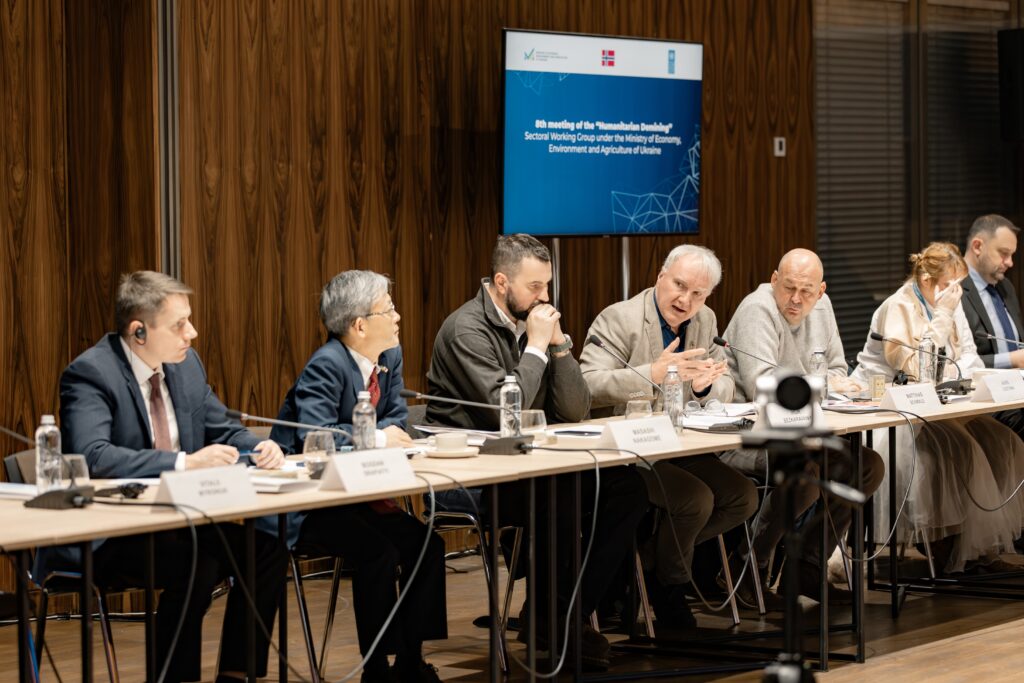
On December 11, a regular meeting of the Sectoral Working Group on Humanitarian Demining was held under the auspices of the Ministry of Economy, Environment, and Agriculture of Ukraine. The key issue was strengthening the localization of Ukraine's Mine Action sector. Participants discussed systemic challenges, financing mechanisms, and partnerships between Ukrainian and international mine action operators.
In recent years, the Mine Action sector has strengthened significantly: the number of certified operators has grown from 18 to over 130, and a number of regulatory acts have been adopted, bringing the sector into line with current needs and adapting it to local conditions.
The state program for compensation of costs for humanitarian demining of agricultural land contributes to the development of national capacity, competitive procurement, and economic efficiency: the average cost of clearing 1 hectare is about $1,350.
Partnership between international and Ukrainian MA operators remains an important factor for further development.
As of today, there are over 130 certified demining operators working in Ukraine, about 95% of whom are Ukrainian. At the same time, national non-governmental operators receive only about 0.6% of humanitarian demining funding from international partners. If we consider only the support provided by foreign and local non-governmental organizations (NGOs), 98% of funding goes through international organizations.
This model was justified in 2022 during the emergency response, but now itis no longer aligned with the current level of national capacity. In this regard, the meeting participants agreed on the need to develop a roadmap for localization.
International partners confirmed the imbalance in funding: most resources go to international NGOs, with Ukrainian operators receiving only a small share. They stressed that the current dependence on international intermediaries poses a risk to the long-term sustainability of the sector, especially given the expected reduction in funding from 2026.
Representatives of international MA operators emphasized that localization requires a comprehensive approach, including technical, financial, and administrative aspects. They stressed the importance of structured cooperation schemes that allow combining the resources and experience of international and national MA operators.
Ukrainian MA operators emphasized that localization is a systemic process that combines responsiveness, economic efficiency, and sustainability. Limited access to financing hinders the potential of national companies: technical and human resources allow for significantly greater volumes of work than are actually being implemented.
Ukrainian MA operators stressed the importance of subcontracting agreements and joint projects to increase efficiency and strengthen trust between operators.
Conclusions and next steps
Participants agreed that successful localization requires:
- create a clear roadmap that includes transparency, accountability, and quality control mechanisms;
- ensure ongoing dialogue between the government, donors, and national operators;
- use structured cooperation schemes to gradually build national capacity;
- integrate modern technologies, in particular the GRIT system, for effective distribution of tasks and prioritization of work prioritization.
The discussion served as an initial diagnosis that will help identify specific steps to overcome localization barriers and strengthen the sustainability of the humanitarian demining sector in Ukraine.